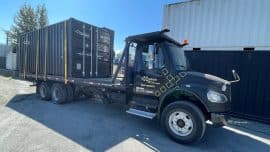
Stacking Up the Benefits: Exploring Multi-Container Structures
Shipping containers may have originally been used for transporting cargo, but today, they’re finding many other uses. In recent years, the concept of multi-container structures has been gaining momentum, offering a flexible, cost-effective alternative to more traditional construction methods. Whether used for commercial complexes, schools, or multi-level container homes, stacking containers for construction is transforming the architectural landscape and offering several benefits.
Table of Contents
- What are Multi-Container Structures?
- Structural Benefits of Stacking Shipping Containers
- Spatial Benefits: Maximizing Space and Flexibility
- Design Benefits of Multi-Container Structures
- Practical Considerations for Stacking Containers
- Cost-Effectiveness of Multi-Container Structures
- The Advantages of Multi-Container Structures
- FAQ

What are Multi-Container Structures?
Multi-container structures refer to stacking and arranging multiple shipping containers to build functional spaces. This concept has become increasingly popular with those seeking innovative solutions for affordable housing, unique commercial spaces, and sustainable building practices.
Multi-container structures offer tremendous versatility. They can be used to create everything from single-family dwellings to multi-level container homes, with individual zones for daytime use, sleeping, and storage. Building with containers offers several benefits such as rapid construction, lower costs, and scalability, along with an eco-friendly approach that makes them an excellent choice for office complexes, retail outlets, and pop-up shops.
Structural Benefits of Stacking Shipping Containers
- Durability and Strength of Steel Containers: A key advantage of stacking shipping containers for building is their inherent strength and durability. Shipping containers are made from high-quality steel and designed to withstand extreme conditions during ocean transport.
- Efficient Modular Building System: Shipping containers are perfect for efficient and scalable construction, thanks to their modular nature.
- Stacking and Load Distribution: Best practices for safe stacking include a stable foundation and the implementation of structural reinforcement.
Spatial Benefits: Maximizing Space and Flexibility
Multi-container structures are an excellent solution for urban environments, making the most of vertical space. Building upward rather than outwards, shipping container stacking is an efficient use of small plots of land.
For residential buildings, separate floors allow for divisions between living areas, bedrooms, and home offices. In a commercial setting, distinct zones for offices, meeting rooms, storage, and more can be created, maximizing utility while maintaining a compact design.
Design Benefits of Multi-Container Structures
- Flexibility in Design: Shipping containers provide significant design flexibility thanks to their modularity.
- Customization Possibilities: Containers can be modified with doors, windows, internal staircases, and more.
- Sustainable Design Features: Using repurposed containers for building provides an eco-friendly alternative.
- Creative Design Solutions: Shipping container stacking provides tremendous flexibility in design.

Practical Considerations for Stacking Containers
- Foundation and Structural Support: A stable foundation is essential for multi-container structures.
- Regulations and Permits: Some regions may have restrictions on the use of multi-level container homes.
- Insulation and Weatherproofing: Containers will require proper insulation and weatherproofing for living or working spaces.
Cost-Effectiveness of Multi-Container Structures
Using shipping containers for building is typically less expensive than other, more traditional construction methods. The prefabricated nature of shipping containers reduces material costs and construction time, making them an affordable option for a range of building projects.
The Advantages of Multi-Container Structures
Multi-container structures provide a wide range of benefits such as structural integrity, spatial efficiency, and flexibility in design. Whether used for residential purposes, commercial complexes, or other special projects, the lower costs, sustainable options, and rapid construction times make shipping container stacking a highly advantageous means of construction.
Interested in creating your own multi-container structure? Contact Axcess Box to get started with your project today.
FAQ
- How Do You Safely Stack Shipping Containers for Construction? A stable foundation and proper weight distribution practices help ensure that containers are adequately supported.
- What are the Advantages of Using Shipping Containers for Multi-Level Buildings? Advantages include cost savings, modular design, rapid construction, and extreme durability.
- How Many Shipping Containers Can Be Stacked Safely? With proper reinforcement, it is possible to stack up to 8 or more containers vertically.
- What are the Design Possibilities for Multi-Container Structures? Modular layouts, customizable interiors, and creative stacking configurations are possible.
- Are Multi-Container Structures Cost-Effective Compared to Traditional Buildings? Multi-container structures are generally more cost-effective due to their reduced construction time, prefabrication, and minimal maintenance requirements.
Conclusion
Multi-container structures are transforming the building industry with their flexibility, cost-effectiveness, and sustainability. Whether for residential or commercial use, these innovative solutions provide a way to maximize space efficiently. Explore our options for shipping containers for sale or rent-to-own options, and get a quote today. For more information, contact us.